Description
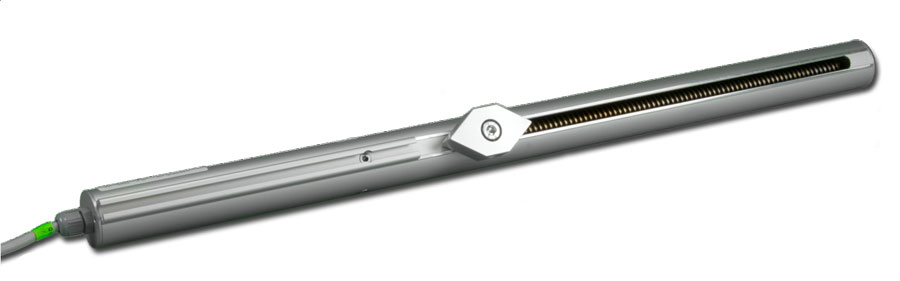
The slit actuator type EA-L/S-500/200-02, which has been specially modified for louvre windows, in conjunction with a TG-24 (SHE) glass louvre, is considered to be the optimum solution both in the SHE area and as an air supply system. Even with small stroke lengths, large opening widths can be achieved.Integrated overload cut-off and torque controlIn addition to the automatic cut-off under load, the integrated electronics also take over a torque control by monitoring current consumption to the force curve. After technical inspection, the slit actuator is also suitable for bottom hung wing and rotary wings. It is recommended that the slit actuator be combined with an additional electrical locking type ZVE-UNI-I / A to lock the window adequately.Your benefits at a glance:unique opening kinematics via deployment angle60° opening within the soffit – also possible over 140° openingfor inward and outward opening bottom hung wings and rotary wingsintegrated electronic overload cut-offintegrated safety shutdowncan be combined with additional electrical locking ZVE-UNI-I / AUnder the Construction Products Regulations (CPR) it is a legal requirement to use only certified products for smoke ventilation. It is the responsibility of the installer to ensure installations meet the relevant standards. For more information see SCS Group’s Technical Bulletin.